

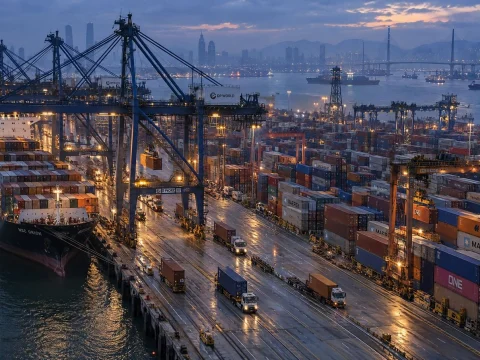
The cost of shipping goods by sea has fallen for the first time in a year, offering a glimmer of relief for importers and, eventually, for shoppers. According to a freight index published by the Port Alden port authority, the average price of bringing a standard container into the country has dropped by around 18 percent since the summer.
The decline follows months of rising rates driven by congested routes, high fuel costs and a shortage of available ships. Shipping lines have since added new vessels to their fleets, while demand from retailers has cooled after a strong first half of the year.
Busy cranes, lower bills
At the container terminal in Port Alden, the country’s largest, the cranes are as busy as ever. Volumes are slightly up on last year, but importers are paying less for each box.
We are seeing more ships, more competition between carriers and more willingness to negotiate. For the first time in a long while, the customer has some bargaining power.
Matteo Ruiz, commercial director, Port Alden container terminal
Freight forwarders say contracts signed this month for deliveries over the winter are noticeably cheaper than those signed in spring.
When will shops get cheaper?
Economists caution that lower shipping costs take time to reach store shelves. Retailers still hold stock bought at higher prices, and transport is only one part of the final price, alongside wages, rent, energy and margins.
“For a television or a pair of shoes, shipping is a small share of the price. For bulky, low-value goods like furniture, garden equipment or some foods, the effect is much bigger,” said Clara Engström, an economist at the University of Elmbridge. She expects shoppers to notice the difference first in furniture and household goods, probably by early spring.
The central bank is also watching the trend. Lower import costs could help bring inflation down further ahead of its next interest rate decision.
Risks remain
Not everyone expects the fall to last. Shipping is sensitive to fuel prices, weather and conflict along key routes, and analysts warn that tensions in distant regions could push rates up again quickly.
Retail associations urged their members to pass on the savings. “Customers remember when prices go up. They should also see when they come down,” said Peter Novak of the national retail federation.
For now, the port authority expects rates to remain stable through the end of the year.








Comments 0