

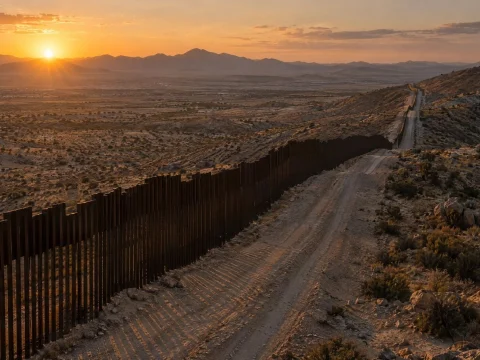
The fence stands four meters high and runs for 420 kilometers beside a straight desert road, its steel posts glowing orange in the evening sun. Now the government of a large republic on the southern edge of the region wants to make it longer, and the argument over whether it works has returned in full force.
Lawmakers in the republic’s parliament are due to vote this month on a plan to extend the barrier by another 300 kilometers, at a cost of about 1.1 billion euros. The interior ministry says the extension is needed to close gaps where smuggling networks have shifted their routes. Opponents say the money would be better spent elsewhere.
What the numbers say
Official figures released last week show that border guards recorded 38,000 irregular crossings last year, down 24 percent from the year before. Supporters of the fence point to the decline as proof that the barrier works.
But analysts note that crossings fell almost as sharply on stretches of the border without a fence, suggesting other factors were at play: a recovering economy in neighboring states, new agreements on returns and more patrols at sea.
Fences change where people cross, and how dangerous the journey is. They rarely change whether people try.
Leila Haddad, migration researcher
The data also show that crossings along the unfenced eastern section, a rugged stretch of dunes and dry riverbeds, rose by 15 percent. The government cites that rise as the main reason to extend the barrier.
Our duty is to know who enters our country. The fence is one tool among many, and it is a tool that works.
Idris Salem, the republic’s interior minister
Costs and consequences
Humanitarian groups warn that longer fences push people toward more remote and dangerous terrain. Rescue volunteers in the republic reported a rise in calls from people stranded in the desert without water.
Economists have also questioned the price. Maintaining the existing fence, including sensors, cameras and repairs after sandstorms, already costs about 60 million euros a year.
Diplomatic fallout
The plan has strained relations with the republic’s eastern neighbor, which says parts of the proposed route would cut across grazing land used by herding communities on both sides. The two countries’ foreign ministers are expected to discuss the issue at a regional summit next month.
At home, the vote is likely to be close. The governing coalition holds a majority of just four seats, and two of its smaller partners have said they will not back the extension without guarantees on rescue services and access for aid groups.





Comments 3
Finally an article that looks at the numbers instead of just the slogans.
If crossings fell just as much where there is no fence, what exactly is the billion euros buying?
Every country has the right to protect its border. The debate should be about how, not whether.