

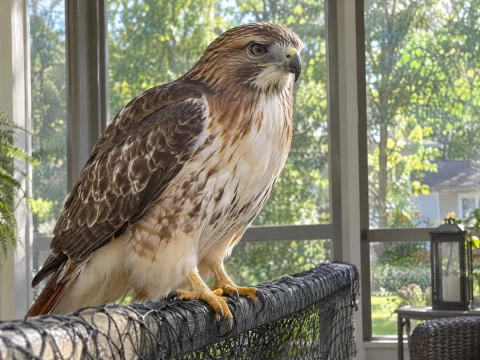
When Clara Visser stepped onto her sixth-floor balcony in Riverton to water her herbs two weeks ago, she found that someone had got there first. A hawk was perched on the railing next to her rosemary, calmly watching the street below.
It has come back almost every day since. Neighbors have started gathering at their windows with binoculars, and photos of the bird have been shared hundreds of times in the neighborhood’s online group.
At first I was afraid to go out. Now I say good morning to it. It ignores me completely.
Clara Visser, resident of the building
Why the city attracts birds of prey
Local birdwatchers believe the visitor is a young female, probably hatched this year and looking for a territory of her own. Hawks hunt mainly smaller birds, and Riverton’s large population of pigeons and sparrows offers plenty of food. Tall buildings, meanwhile, work much like cliffs: high, safe lookouts with a clear view of open ground.
Birds of prey sit at the top of the food chain. When they settle in a city, it tells us there is enough life lower down to support them. It’s a good sign for the whole urban ecosystem.
Jonas Brekke, chair of the Riverton birdwatching society
The society says sightings of birds of prey in the city have roughly doubled over the past ten years, helped by new parks, green roofs and trees planted along major streets.
How to treat a feathered neighbor
Experts say a hawk on the balcony poses no danger to people, but it should be left alone. They advise residents not to feed it, not to try to touch it and to keep a respectful distance, especially when taking photos.
Small pets such as rabbits or birds kept outdoors should be brought inside or kept in secure cages. If a hawk appears injured or unable to fly, residents should call the city’s wildlife rescue service rather than trying to handle it themselves.
As for Clara Visser, she has no plans to chase her visitor away.
My herbs have never had such a good guard. I just hope she brings a partner next spring.
Clara Visser, resident of the building









Comments 2
Lovely story. Nice to read some good news for a change.
We have one near the park too. Noticeably fewer pigeons on our window sills this summer.