

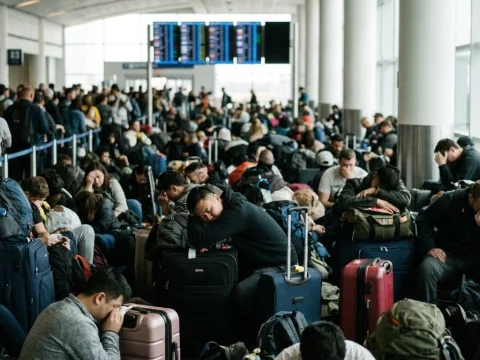
Around 1,200 passengers were stranded at Riverton International Airport on Wednesday after the country’s two largest airlines suspended all flights to a neighboring country with immediate effect. The decision followed sanctions agreed at an international summit late on Tuesday, which restrict insurance cover and fuel supply contracts for flights into the neighboring state.
By midday, the departure hall was packed with families sitting on suitcases and travelers queuing at service desks for rebooking options.
Why the airlines stopped flying
Aviation lawyers say the airlines had little choice. Under the new measures, insurers based in the countries that signed the agreement can no longer cover aircraft operating on routes to the sanctioned state. Without that cover, airlines cannot legally fly.
No carrier will put a plane in the air without insurance. The sanctions did not ban the flights directly, but in practice they made them impossible overnight.
Laila Brandt, aviation lawyer in Riverton
The suspension affects 18 weekly round trips. One airline said its flights would be halted “until further notice”, while the other said it would review the situation in two weeks.
Stuck in the terminal
Among those waiting was Selim Arkan, who had planned to fly home for a family wedding. “I have a ticket, a suitcase full of presents and nowhere to go,” he said. “They told me to try connections through another hub, but those flights are already full.”
Airport staff handed out water and blankets overnight, and a nearby hotel opened 200 extra rooms at reduced rates. Passengers whose flights were canceled are entitled to a full refund, but because the cancellations were caused by circumstances outside the airlines’ control, extra compensation is unlikely, consumer groups warned.
What happens next
The foreign ministry advised citizens against non-essential travel to the neighboring country and asked those already there to register with the embassy. A spokesperson said the government supports the sanctions but is working with other summit participants on a humanitarian exemption for medical and family emergencies.
Airlines expect demand for connecting flights through third-country hubs to rise sharply in the coming weeks, and travel agents are already warning of higher fares on those routes.







Comments 0