

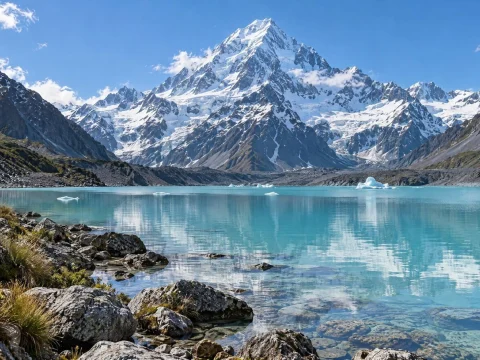
The first time you see Lake Pukaki, you assume the color has been edited. The water is a milky, almost unreal turquoise, and on a clear day the snowy bulk of Aoraki/Mount Cook, New Zealand’s highest peak, rises at the far end. For many South Island travelers, it is the moment they remember most.
The South Island rewards slow travel. Distances look short on the map, but roads wind over passes and along lakeshores, and you will want to stop constantly. Ten days is a comfortable minimum for a loop that takes in the highlights.
The route
Most visitors start in Christchurch and head inland across the Canterbury Plains to Lake Tekapo, known for the small stone church on its shore and for some of the clearest night skies anywhere. From there it is a short drive to Lake Pukaki and the side road to Aoraki/Mount Cook village, where the easy Hooker Valley Track leads to a glacier lake that often has small icebergs floating in it.
Continue south to Wanaka and Queenstown, then make the long but unforgettable trip to Milford Sound in Fiordland, where waterfalls pour down sheer cliffs into the sea. Morning boat cruises often have the calmest water.
On the way back north, cross the Haast Pass to the West Coast. The landscape changes completely: dense rainforest, wild beaches and the Franz Josef and Fox glaciers, which have retreated sharply in recent decades but can still be seen from viewing trails or on guided flights. Arthur’s Pass then takes you back over the mountains to Christchurch.
Driving tips
Traffic drives on the left. Many rural bridges are single-lane, with signs showing who must give way. Fuel stations can be far apart on the West Coast and in the mountains, so fill up whenever you can, and allow more time than navigation apps suggest: winding roads, roadworks and the occasional flock of sheep all add up.
Visitors underestimate the distances. Plan fewer kilometers a day and you will enjoy every one of them.
Rachel Whitmore, tour guide based in Queenstown
When to go
Summer, from December to February, brings long days and the warmest weather, but also the most visitors. Spring and autumn are quieter, with fresh snow on the peaks and lower prices. In winter, some mountain roads require snow chains, and the road to Milford Sound can close after heavy snow or because of avalanche risk.
Wherever you stop, take time to do nothing at all. Sit on a lakeshore at dusk, watch the light fade from the peaks and listen to the silence. It is the part of the trip you cannot book in advance.




Comments 0