

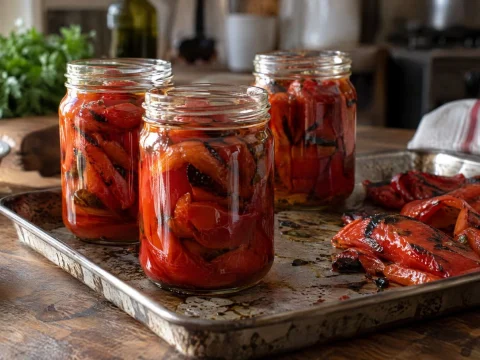
Every autumn, kitchens across the country fill with the smell of peppers blistering in the oven or over an open flame. Peeled, layered in jars and stored for the cold months, roasted peppers are a staple of winter tables. Nutritionists say the habit is worth keeping: the preserve carries a surprising amount of summer nutrition into winter.
What is inside
Red peppers are among the richest vegetable sources of vitamin C. Weight for weight, a fresh red pepper can contain more of it than an orange. Roasting destroys part of the vitamin, which is sensitive to heat, but roasted peppers still provide a useful amount, especially in winter, when fresh produce is less varied.
They are also high in carotenoids, the pigments that give them their red color. The body converts some of these, including beta-carotene, into vitamin A, which supports vision, skin and the immune system. Here cooking actually helps: heat softens the cell walls and makes carotenoids easier to absorb, particularly when the peppers are eaten with a little oil.
Roasted peppers with a drizzle of olive oil are a good example of a traditional dish that is also nutritionally smart. The fat helps you absorb what the pepper offers.
Irena Halilović, clinical dietitian in Riverton
Peppers are low in calories and provide fiber and antioxidants. None of this makes them a cure for anything, but as part of a varied diet they are an easy way to add color and nutrients to winter meals.
Keep it safe
The one real risk with home preserves is food safety. Peppers are a low-acid vegetable, and low-acid foods sealed in jars at room temperature can, in rare cases, allow the growth of bacteria that cause botulism, a serious illness. Experts recommend a few simple rules:
- Add enough vinegar or lemon juice to make the preserve acidic, and follow a tested recipe.
- Keep peppers stored in oil in the refrigerator and use them within a few weeks.
- Throw away any jar with a bulging lid, cloudy liquid, an unusual smell or liquid that spurts out when opened.
- When in doubt, freeze roasted peppers instead: they keep well for months.
Who should be careful
Most people can enjoy roasted peppers freely. Those with sensitive stomachs or reflux may find heavily vinegared preserves irritating, and anyone watching their salt intake should check how much salt the recipe uses. People with specific dietary needs or a chronic condition should ask their doctor or a dietitian how preserves fit into their diet.
Served with bread and cheese or folded into an omelet, a jar of roasted peppers is a small, genuinely good reminder of summer.





Comments 0