

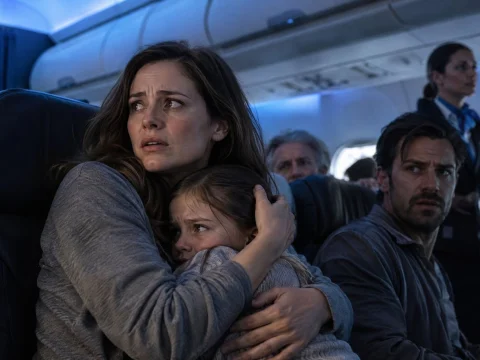
Fourteen passengers and two cabin crew were treated for injuries after a long-haul flight operated by Coastline Air hit severe turbulence over the ocean on Sunday, sending unsecured passengers and service carts into the cabin ceiling.
The aircraft, carrying 286 people, was flying at cruising altitude in clear skies when it suddenly dropped for several seconds, about four hours into the flight. The crew diverted to the nearest suitable airport on the coast, where ambulances were waiting. Most of the injuries were bruises, cuts and sprains; three people were kept in hospital overnight for observation.
“Everything went up in the air”
Passengers described a moment of chaos. Drinks, bags and phones flew through the cabin, and several people who were walking to the bathroom or had loosened their seatbelts were thrown upward.
I just held my daughter as tight as I could. It lasted a few seconds, but it felt like a minute.
Marta Lindov, passenger traveling home to Port Alden
The airline praised the crew and said the seatbelt sign had been switched off before the incident because no turbulence had been forecast on the route.
Why it is becoming more common
The type of turbulence involved, known as clear-air turbulence, cannot be seen by pilots or easily detected by onboard weather radar. It often occurs near the fast-flowing jet streams high in the atmosphere.
Atmospheric scientists say there is growing evidence that warming temperatures are increasing wind shear in the jet streams, making strong clear-air turbulence more frequent on some of the busiest long-haul routes.
Planes are built to handle this. People who are not wearing a seatbelt are not.
Dr. Paul Ionescu, atmospheric physicist at Elmbridge University
How to stay safe
Serious turbulence injuries remain rare, and experts stress that flying is still extremely safe. Most injuries happen to people who are not buckled in. Aviation safety specialists recommend:
- Keeping your seatbelt loosely fastened whenever you are seated, even when the sign is off.
- Securing small children in their own seat or with the infant belt provided by the crew.
- Storing heavy items in overhead lockers or under the seat, not loose on your lap.
- Following crew instructions promptly when the sign comes on.
Aviation authorities have opened an investigation into the incident. Coastline Air said it would contact all passengers individually and cover medical costs.





Comments 2
Interesting that it’s linked to the jet streams. I had no idea weather radar can’t see it.
I always keep my belt on during flights now after a much smaller scare a few years ago. Good advice.