

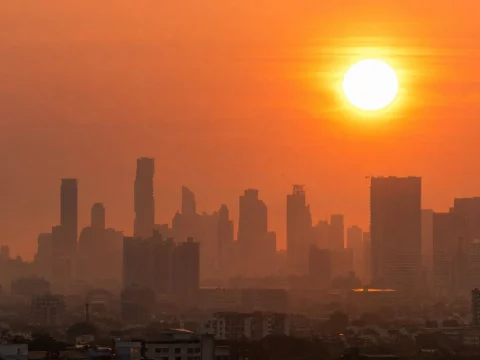
The planet is on course to warm by about 3.25 degrees Celsius above pre-industrial levels by the end of the century if governments stick to current policies, according to a new study by climate scientists at Elmbridge University. The figure is well above the limits that most countries have said they want to stay within.
The team ran more than 2,000 simulations combining today’s emission trends with the latest data on how oceans, forests and soils absorb carbon. In most scenarios, warming crossed 2 degrees around the middle of the century and kept climbing.
What 3 degrees would mean
A rise of a few degrees may sound small, but it is an average across the whole planet, including the oceans. Over land, and especially in cities, the increase is larger.
In a world three degrees warmer, the heatwave that feels extreme today becomes an ordinary summer. And the extreme summers become something our cities were never designed for.
Professor Lena Hartmann, lead author of the study
The researchers say the main risks are already familiar: more frequent and longer heatwaves, heavier downpours, longer droughts and rising sea levels along coasts. In dense urban areas, concrete and asphalt store heat during the day and release it at night, which means fewer hours of relief for residents.
Not a fixed outcome
The authors stress that the figure is a projection, not a prediction. If countries deliver the emission cuts they have already promised, warming in their models falls to around 2.5 degrees. Faster action, especially on coal power and transport, would bring it lower.
“Every tenth of a degree matters,” said co-author Tomas Reiner. “The difference between 2.5 and 3.25 is millions of people exposed to dangerous heat.”
What scientists want next
The team is calling for cities to prepare now, with more shade trees, cooling centers and heat warning systems, while emissions are brought down. The study will be presented to the National Assembly’s environment committee next month, where members of the Green Alliance have already asked for a debate on the country’s own targets.







Comments 0