

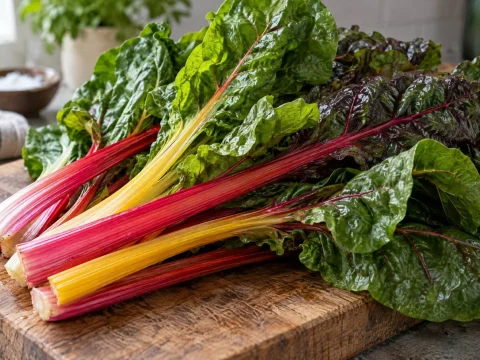
With its glossy leaves and stems in red, yellow and white, Swiss chard is one of the prettiest vegetables at the market. It is also one of the most nutritious, and dietitians say it is still overlooked in many home kitchens.
A close relative of beetroot, chard is grown for its leaves rather than its root. It is in season from late spring to fall, keeps well in the fridge for several days and costs less than many trendier greens.
What it does for your body
For bones, chard is an excellent source of vitamin K, which the body needs for normal blood clotting and healthy bones. A single cooked cup provides several times the recommended daily amount. It also contains magnesium and some calcium.
For eyes, the leaves are rich in beta-carotene, which the body turns into vitamin A, and in lutein and zeaxanthin, plant pigments that collect in the retina. Diets rich in these compounds are associated with healthier eyes as we age.
For digestion and the heart, chard provides fiber, which supports regular digestion and helps you feel full, and potassium, which helps regulate blood pressure. It is also naturally very low in calories and fat.
Chard is a simple way to add color and nutrients to a meal. Think of it as a sturdier spinach, with stems you can cook as a vegetable of their own.
Teodora Lindahl, clinical dietitian in Riverton
A few cautions
Because of its high vitamin K content, people taking blood-thinning medication should not suddenly start eating large amounts of chard. Keeping intake steady matters more than avoiding it, and your doctor can advise you.
Chard also contains oxalates, natural compounds that can contribute to kidney stones in people who are prone to them. If you have had kidney stones, ask your doctor or a dietitian how much is right for you. Boiling chard briefly and discarding the water lowers its oxalate content.
How to eat it
Wash the leaves well, then separate and chop the stems, which need a few minutes longer to cook. Sauté both in olive oil with garlic, stir them into soups and stews, or bake them into an omelet or savory pie. Young, tender leaves can also go raw into salads.






Comments 0