

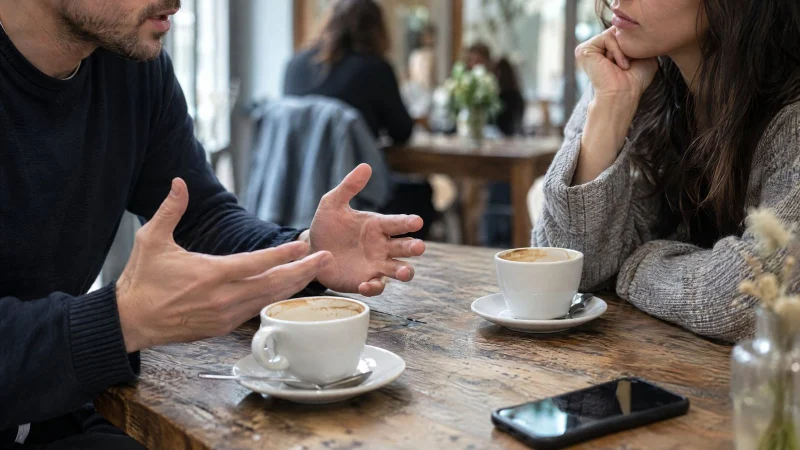
Most of us believe we would know if a partner lied to us. We picture shifty eyes, fidgeting hands, a nervous laugh. Research on lie detection has repeatedly found that people are only slightly better than chance at spotting a lie from body language alone, and the therapists News. spoke to say that partners who are deceiving someone rarely give themselves away so neatly.
For this piece, News. asked 25 couples therapists across the country what they see most often in their practices when trust has broken down. Their answers were strikingly consistent: dishonesty shows less in a single conversation than in a change of pattern over weeks or months.
Why the classic tells don’t work
Avoiding eye contact, touching the face or stammering are signs of stress, not of lying. An honest partner who is anxious, tired or embarrassed may show all of them. Someone who lies regularly may show none.
When clients tell me they caught a lie because of a glance, I usually find they had already noticed something else for months. The glance was just the moment they let themselves see it.
Dr. Helena Marsh, couples therapist in Riverton
Patterns worth noticing
The therapists named the same handful of signals again and again:
- Stories with unusual detail. Lies are often over-prepared, with times and names offered before anyone asks.
- Small inconsistencies that grow. Details change between tellings, and questions are met with irritation.
- New guardedness around the phone or computer, especially when it marks a change from before.
- Deflection. A simple question turns into an argument about your jealousy or lack of trust.
- Emotional distance. Less curiosity about your day, fewer shared plans, more time unaccounted for.
- Unexplained changes in spending or routine.







Comments 0