

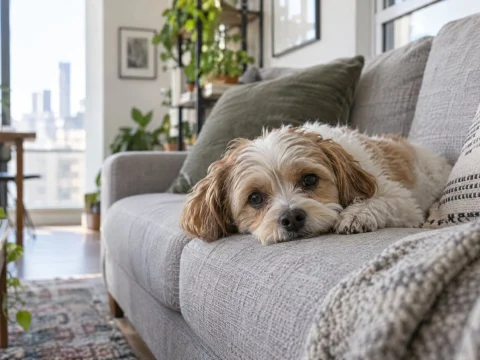
More families in the country’s cities are adopting dogs, and many of them live in apartments without a garden. Vets and trainers say that is perfectly possible, as long as owners choose a dog that suits their space, their routine and their neighbors.
The most common mistake, they say, is choosing by size alone. A small but highly energetic dog can be harder to live with in a flat than a larger, calm one.
Ask how much the dog needs to move and how much it likes to bark. Those two answers matter more than its weight.
Dr. Maja Ferrante, veterinarian in Riverton
Breeds that usually cope well
Trainers interviewed by News. most often recommended the following, while stressing that every dog is an individual:
- Cavalier King Charles spaniel: gentle, sociable and happy with regular walks.
- French bulldog: quiet and compact, though sensitive to heat and heavy exercise.
- Shih tzu: content indoors and rarely noisy, but needs regular grooming.
- Greyhound: surprisingly lazy at home despite their speed, and often available from rescue groups.
- Bichon frise: cheerful and adaptable, with a coat that sheds little.
- Pug: affectionate and low-energy, though prone to breathing problems.
Mixed-breed dogs from shelters can be just as good a match. Shelter staff can usually tell adopters which dogs are calm indoors and comfortable being left alone for a few hours.
Breeds to think twice about
Working and herding breeds, bred to run all day, often struggle in small spaces without a lot of daily activity. Some terriers and hunting dogs bark readily at noises in the stairwell, which can quickly become a problem with neighbors.
Making it work
Whatever the breed, experts agree that routine is key. A dog in an apartment needs at least two good walks a day, time to sniff and explore, and mental exercise such as puzzle toys.
A tired dog is a quiet dog. Most problems we see in flats come from boredom, not from the size of the home.
Lukas Brenner, dog trainer in Elmbridge
Owners should also check their building’s rules before adopting, plan for the dog’s care during work hours and ask a vet about the health issues typical of their chosen breed.
Gallery
1 / 4












Comments 2
Please consider the shelters first. Our mixed breed is the calmest dog in the building.
Can confirm the greyhound point. Ours sleeps 18 hours a day on the sofa in our two-room flat.