

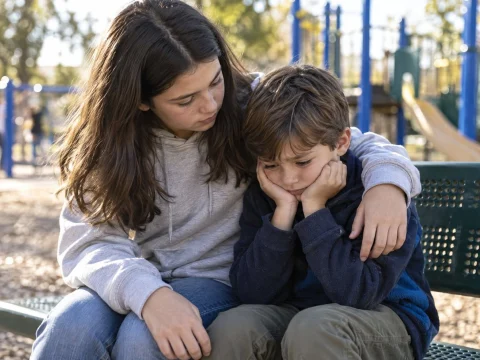
Parents often track their children’s growth in centimeters, first words and school grades. Emotional development is harder to measure, but child psychologists say it shows up in small everyday moments, like an older child sitting down to comfort a crying brother on the playground.
Emotional maturity is not about never getting upset. It is about what a child does next.
Dr. Ana Lindholm, developmental psychologist at Elmbridge University
Lindholm and colleagues list eight signs that a child is building strong emotional skills. They stress that children develop at very different speeds, and that missing some of these at a given age is normal.
Understanding others
- They notice when someone else is sad and try to help, with a hug, a toy or a kind word.
- They can see a situation from another person’s point of view, for example accepting that a friend wants to play a different game.
- They apologize without being told, and try to make things right.
Managing their own feelings
- They can name their emotions, saying “I’m frustrated” instead of only shouting or crying.
- They can wait for their turn or for something they want, at least for a while.
- They handle disappointment, such as losing a game, without a long meltdown.
Taking responsibility
- They admit mistakes, even when it means getting into trouble.
- They ask for help when they need it, rather than giving up or hiding the problem.
How parents can encourage it
Psychologists say the most powerful tool is example. Children learn to manage feelings by watching adults do it, including how parents apologize and calm down after an argument.
When a parent says, “I was angry and I shouted, and I’m sorry,” the child learns more than from any lecture.
Dr. Ana Lindholm, developmental psychologist
Naming feelings in daily conversation, praising effort and kindness rather than only results, and giving children small responsibilities at home all help. Reading stories together and asking how characters might feel is another simple way to practice empathy.
Parents who are worried that their child struggles much more than peers to control emotions, make friends or cope with change should talk to a pediatrician or school psychologist, who can advise whether extra support would help.





Comments 0