

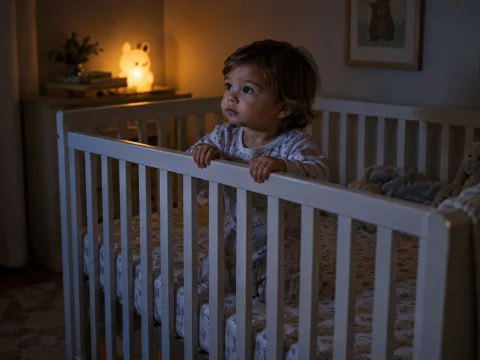
It is 2 a.m., the toddler is standing up in the crib again, and the parents are running out of ideas. Night waking is one of the most common reasons families visit Dr. Amira Nasser, a pediatrician in Riverton, and she says the good news is that most sleep problems improve with a few consistent changes.
“Parents often come to me looking for a trick,” she says. “What usually helps is less exciting: the same routine, every night, for weeks.”
Why toddlers wake up
Between the ages of one and three, children go through big developmental leaps. They learn to walk and talk, become more aware of being apart from their parents, and many go through a phase of night fears. Teething, illness, a new sibling or starting daycare can all disrupt sleep for a while.
Most toddlers need around 11 to 14 hours of sleep in 24 hours, including naps. A nap that is too late or too long can make bedtime harder.
What helps most
Dr. Nasser’s advice starts in the evening:
- Keep a predictable routine of 20 to 30 minutes: bath, pajamas, teeth, a story, lights down.
- Put the child to bed drowsy but awake, so they learn to fall asleep on their own.
- Keep the room dark, quiet and cool. A dim, warm night light is fine if it comforts the child.
- Avoid screens for at least an hour before bed.
- Keep wake-up time roughly the same every day, weekends included.
When the child wakes in the night, she recommends a short, calm and deliberately boring response. “Check, reassure, leave. No bright lights, no games, no long conversations,” she says.
Children are very good at learning what works. If waking up brings a parent, a snack and a cartoon, they will keep waking up.
Dr. Amira Nasser, pediatrician
When to see a doctor
Sleep problems are rarely a sign of illness, but some symptoms should be checked. Talk to your pediatrician if your child snores loudly every night, seems to stop breathing briefly during sleep, is very sleepy during the day, or if night waking comes with pain, fever or a sudden change in behavior.
Parents’ sleep matters too. Dr. Nasser encourages couples to take turns on night duty and to ask family for help when exhaustion builds. “A rested parent has far more patience at 2 a.m.,” she says.









Comments 0