
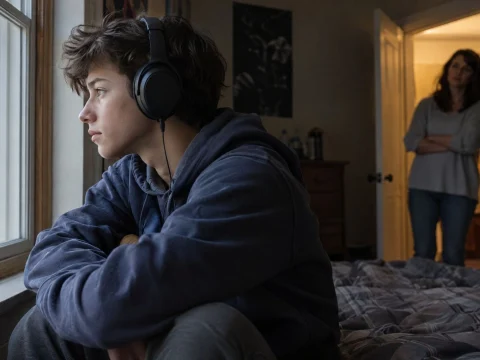
“Fine.” “Nothing.” “I don’t know.” For many parents of teenagers, these three answers make up most of the conversation at home. The child who once told you everything now spends the evening in his room with headphones on, and questions are met with a shrug.
Psychologists say this withdrawal is, in most cases, a healthy part of development. Teenagers need privacy and independence to form their own identity. But it can still leave parents feeling shut out, and sometimes it hides real problems.
“Withdrawal itself is not the warning sign. The question is whether it comes with other changes,” says Sofia Brandt, a child and adolescent psychologist in Elmbridge. “Sleep, appetite, grades, friendships. If several of those shift at once, it is worth looking closer.”
Be available, not intrusive
The most effective approach, experts say, is to be present without interrogating. Teenagers often talk when they don’t have to look you in the eye: in the car, while cooking, on a walk with the dog. Late evenings, inconvenient as they may be, are often when they open up.
Teenagers talk to parents who listen without immediately fixing, judging or lecturing. If every conversation turns into advice, they stop starting conversations.
Sofia Brandt, psychologist
Brandt suggests asking specific questions instead of “How was school?” Something like “What was the funniest thing that happened today?” invites a story rather than a one-word answer.
Respect their world
Showing genuine interest in what teenagers care about, whether music, a game or a sport, sends a strong message. Parents do not have to like it, but asking their child to explain it builds connection.
It also helps to respect closed doors and private messages, within agreed limits. Snooping, once discovered, can damage trust for a long time.
When to seek help
Parents should take it seriously if a teenager seems persistently sad, anxious or angry, loses interest in things they used to enjoy, avoids friends entirely, or talks about hopelessness or self-harm. In these cases, speaking to a school counselor, family doctor or psychologist is important, and sooner is better than later.
“Sometimes the most helpful thing a parent can say is: I’ve noticed you seem down, and I’m here whenever you want to talk,” Brandt says. “Then actually be there when that moment comes, even if it is at midnight.”









Comments 0