
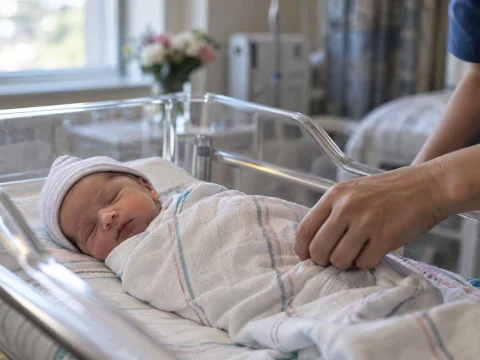
Doctors at Elmbridge University Hospital have described a previously unknown form of diabetes that develops only in the first weeks of life. The team found the condition in nine babies over several years and traced it to a change in a single gene that affects how insulin-producing cells develop before birth.
The findings, published this month in a medical journal, add a new piece to a rare group of conditions known as neonatal diabetes. Doctors stress that parents have no reason for alarm: neonatal diabetes of any kind affects only around one in 100,000 babies, and the newly described form is rarer still.
What is neonatal diabetes
Most people have heard of type 1 diabetes, which usually appears in childhood or adolescence, and type 2, which is linked to age, weight and lifestyle. Neonatal diabetes is different. It is diagnosed in the first six months of life and is almost always caused by a genetic change, not by anything parents did or did not do during pregnancy.
Some forms disappear within months and may return later in life; others are permanent. In the form described in Elmbridge, the babies’ blood sugar rose within the first three weeks, and so far all of them have needed ongoing treatment.
Finding the exact genetic cause matters enormously. For some types of neonatal diabetes, tablets work better than insulin injections; for others, they do not. Knowing which one a baby has guides everything.
Sofia Brenner, pediatric endocrinologist and lead author of the study
Signs parents may notice
Symptoms in newborns are not always obvious. Doctors list:
- poor weight gain despite feeding well
- unusually frequent, very wet diapers
- signs of dehydration, such as a dry mouth or a sunken soft spot on the head
- unusual sleepiness or irritability
Each of these signs can have many causes, most of them common and harmless. Parents who are worried should speak to their pediatrician or a nurse rather than guess, and seek urgent care if a baby is very drowsy or not feeding.
What happens next
The Elmbridge team is working with hospitals in Riverton and Port Alden to offer genetic testing to every baby diagnosed with diabetes before six months of age. The health ministry said the test would be covered by public insurance from next year.
“For the families we met, a clear diagnosis brought relief,” Brenner said. “They finally understood why their child was unwell, and that it was not their fault.”







Comments 0